

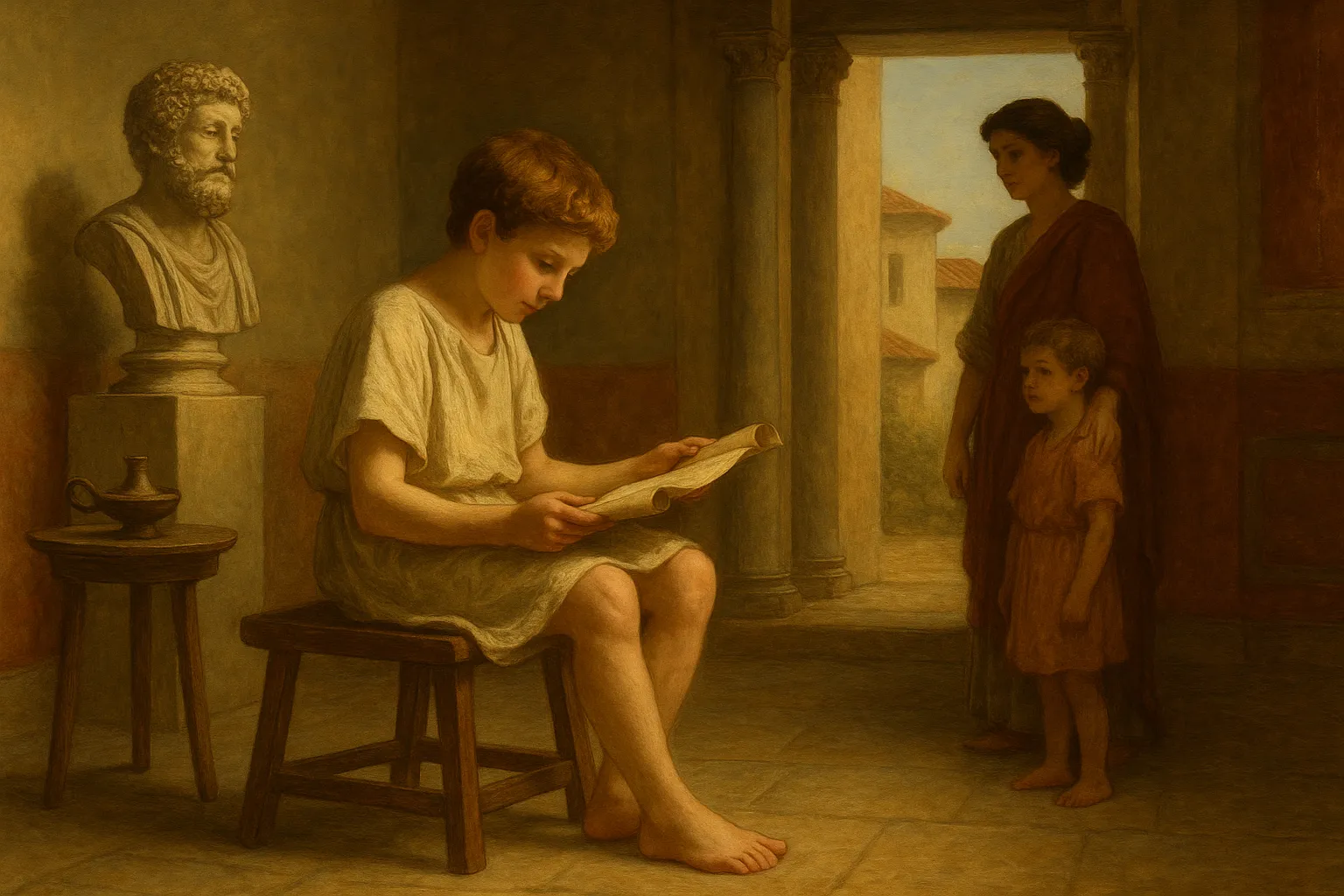

A Childhood Shaped by Virtue and Adversity
The dawn that illuminated Marcus Aurelius’ awakening was not merely a historical accident, but the result of years carefully sown with the seeds of virtue, discipline, and philosophical inquiry. To truly grasp how Rome’s philosopher-emperor emerged, one must travel back to the earliest chapters of his life, a time shaped by privilege, loss, and a relentless search for meaning.
Noble Origins and a Legacy of Virtue
Marcus Annius Verus, later known to the world as Marcus Aurelius, was born into the highest echelons of Roman society on April 26, 121 CE. His family was steeped in senatorial tradition; his grandfather was thrice consul, and his mother, Domitia Lucilla, was an heiress of immense wealth and refinement. The young Marcus grew up amidst the grandeur of Rome’s Caelian Hill, surrounded by a world where expectations were as weighty as the marble columns that adorned his family’s villas.
Yet, despite such privilege, Marcus’ childhood was marked by loss. His father died when Marcus was barely three years old. The void was filled by his stoic grandfather and a constellation of wise tutors, who taught him early the values of humility, duty, and self-restraint, values that would become the very bedrock of his future Stoic philosophy.
The Early Stirring of a Stoic Mind
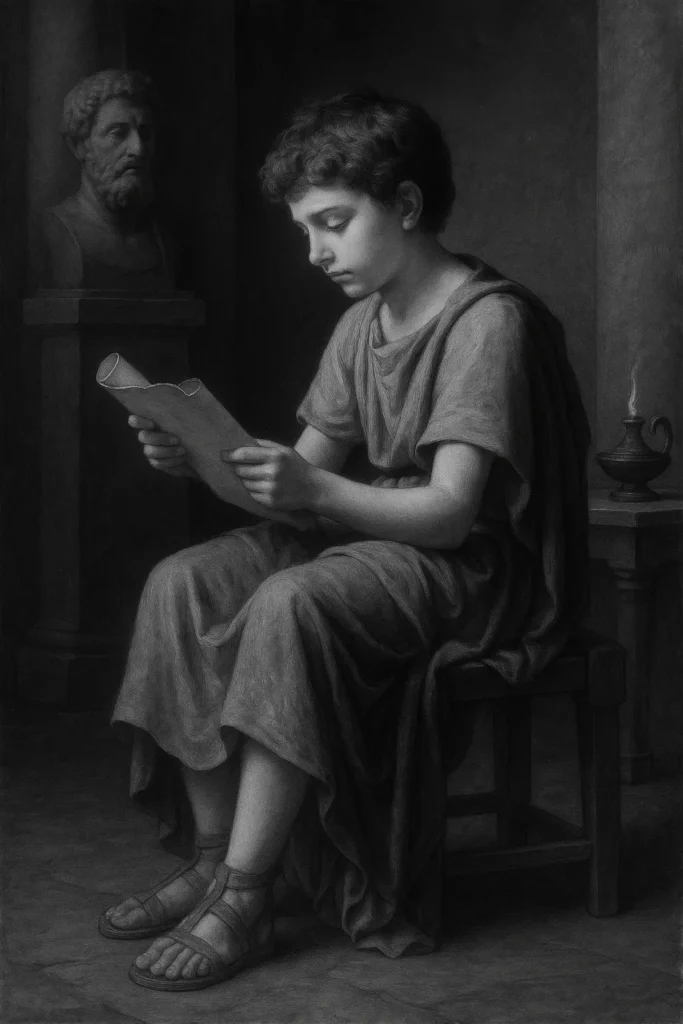
From a remarkably young age, Marcus displayed a contemplative nature, rare among Roman youth. Influenced by the philosopher-painter Diognetus, he began to adopt the habits of a Stoic even as a child, sleeping on the floor, donning a simple cloak, eschewing the luxury of his birthright. These gestures, though sometimes discouraged by his loving mother, reflected a soul already yearning for inner clarity and discipline.
By age eleven, Marcus was already captivated by philosophy. His teachers remarked upon his seriousness and sincerity, a boy who preferred books to games, who listened more than he spoke. These formative years fostered in Marcus Aurelius an early love for wisdom, truth, and the rigorous pursuit of self-mastery, core tenets of Stoicism that would later define his reign as emperor.
Education: The Shaping of a Philosopher-Emperor
Marcus’ education was entrusted not to Rome’s public schools, but to the most distinguished tutors his family could secure. These included grammarians such as Trosius Aper, rhetoricians like Tuticius Proculus, and, eventually, masters of Greek literature and philosophy. Under the watchful eye of his grandfather and great-grandfather, Marcus learned that true nobility lay not in rank, but in character.
Perhaps the most profound influence was Quintus Junius Rusticus, a stern and honest Stoic, who guided Marcus away from the trappings of rhetoric and towards the meditations of Epictetus. Through Rusticus, Marcus encountered the great works of Stoic philosophy, internalizing lessons on virtue, fate, and the impermanence of life. These lessons did not merely reside in the mind of Marcus Aurelius, they became the compass by which he navigated the shifting tides of Roman politics and personal adversity.
From Privilege to Purpose
Despite inheriting immense wealth and social standing, Marcus Aurelius demonstrated a remarkable disregard for material gain. Upon reaching adolescence, he willingly ceded portions of his inheritance to his sister, a gesture emblematic of his Stoic belief that virtue outweighs possession. His life was a constant balancing act between the responsibilities of Roman aristocracy and the inner demands of philosophy.
Even as he was inducted into the priestly order of the Salii and recognized by Emperor Hadrian for his virtues, Marcus remained humble, ever cautious of pride and excess. He preferred the company of his teachers and philosophers to the intrigues of Rome’s elite, striving always to live by the precepts of self-control, wisdom, and justice.
The Dawn of Leadership: Adoption and Preparation
Fate, however, had greater plans. In his mid-teens, Marcus was adopted by Antoninus Pius at the behest of Emperor Hadrian, positioning him as the heir to the imperial throne. This seismic event brought Marcus directly into the heart of Roman power, and, with it, new mentors, new lessons, and ever-deepening responsibilities.
Yet, even as he assumed roles of increasing authority, Marcus Aurelius continued to cultivate his philosophical grounding. The rigorous training he received, from administration and law to rhetoric and literature, was always underpinned by a steady devotion to the Stoic ideals that would one day be immortalized in his Meditations.
The Making of a Philosopher-King
The childhood of Marcus Aurelius was far more than a mere prologue to his reign. It was the crucible in which a philosopher-king was forged, a young boy who, despite privilege and power, chose the harder path of wisdom, restraint, and self-examination. The influences of his family, tutors, and, above all, his early immersion in Stoic philosophy created not only an emperor, but a timeless example of what it means to lead with integrity.
As we look back on these formative years, we find the very origins of the meditative depth, compassion, and iron discipline that would later shine through in Marcus Aurelius’ life and legacy, a legacy that still inspires seekers of wisdom, students of Stoicism, and anyone searching for a path to virtue amid the noise of the world.