

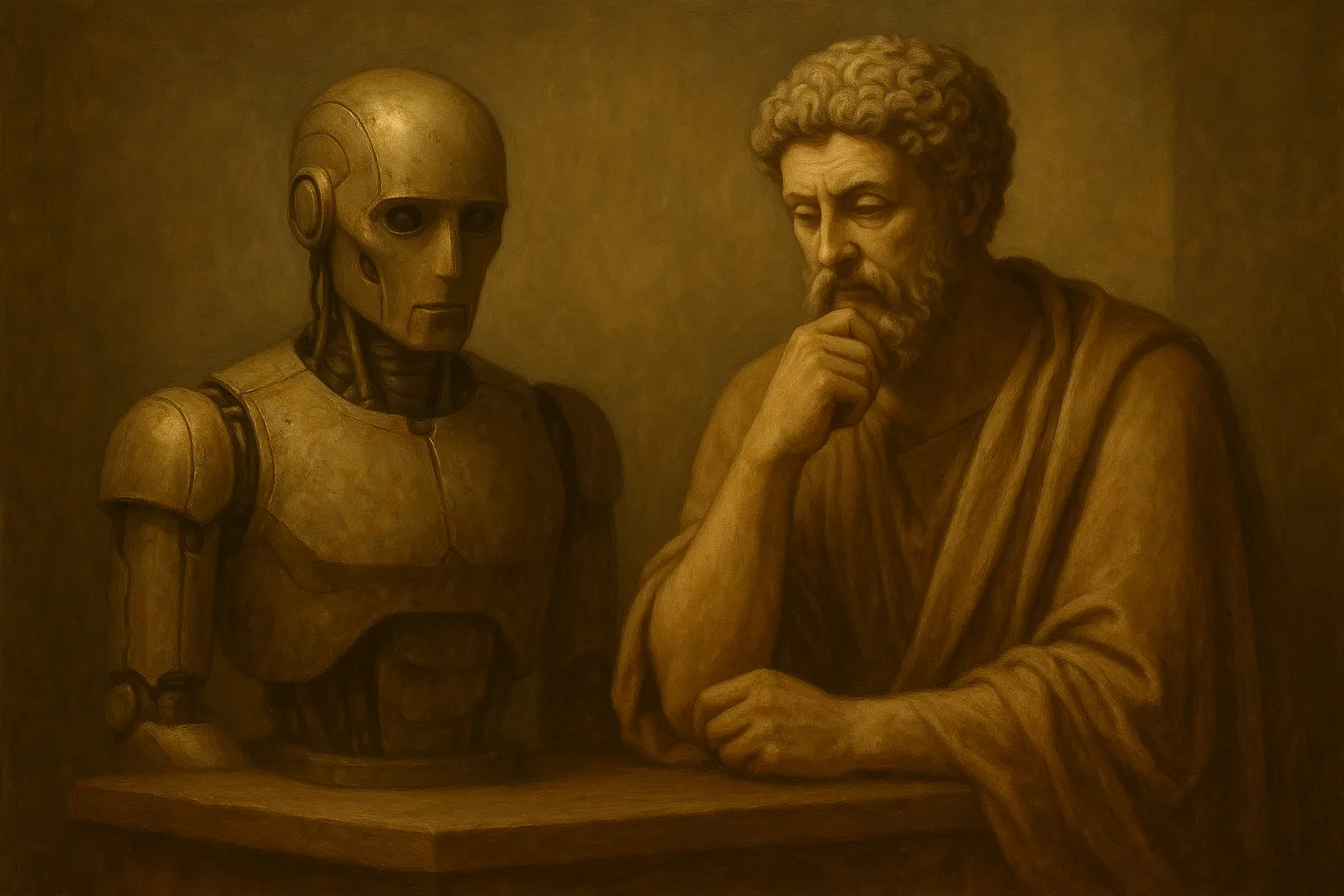

Headlines swing daily between hope and alarm: talks of a potential thaw in the Ukraine conflict, fresh U.S. inflation figures, record-breaking heatwaves and wildfires across Europe, and new international regulations for artificial intelligence. In the swirl of it all, Stoicism doesn’t feel like a relic of antiquity, but rather a practical, time-tested philosophy, a mental operating system enabling us to discern what lies within our control and what lies beyond it. Marcus Aurelius put it aptly: examine what is up to you, and act with resolve there. What is not, it may be endured with equanimity.
Politics & Peace: Acting Within One’s Sphere of Control
Today, discussions about a possible summit, perhaps even in Alaska, between Washington and Moscow are gaining traction; Ukrainian representatives insist that no decisions about borders can be made without Kyiv’s consent. Diplomacy searches for pathways to peace, while conflict zones continue to emit reports of loss and devastation. A Stoic would advise: focus on what lies within your power, donate, educate, help, vote, rather than lose yourself in speculative currents. Awareness, yes; panic, no. This is not a call to passivity, but to clarity: act virtuously, verify facts, separate emotion from judgment.
Economy & Prices: Facts First, Emotions Later
Emerging U.S. inflation data suggests a gradual easing. In Europe, the ECB has held interest rates steady, underscoring that the disinflationary trend remains intact. A Stoic lens sees numbers as external phenomena; our responses are internal and adaptable. We can reevaluate budgets, build savings, compare contracts, areas where the virtue of “practicality” takes hold. Panic is neither a strategy for investing nor a recipe for life.
Climate & Resilience: Between Smoke and Serenity
Europe is again grappling with extreme heat and widespread wildfires, from Southern France to the slopes of Vesuvius, trails have been closed and brave firefighters battle across multiple fronts. Stoic resilience doesn’t deny the heat, but paired calm with preparedness: activate early-warning apps, adjust travel, secure cool havens, protect neighbors. Calm without foresight is complacency; preparation without equanimity is exhaustion.
Technology & Regulation: AI with Character
The European Union is progressively implementing its AI Act. Some restrictions, from bans to governance rules and requirements for general-purpose models, have taken effect in 2025, with further mandates planned through 2026 and 2027. The Stoic core here: technology is a tool; character, the compass. We need both innovation and moderation. Marcus Aurelius might have asked, “Does it serve the common good?” If yes, then build it with clarity, transparency, and responsibility.
Information Overload & Emotional Discipline: Treat Yourselves to a News Diet
Google Trends, news feeds, live scores, all compete for our attention. Stoics advocate not avoidance, but moderation. Set definite time windows for news consumption, consult primary sources, avoid doomscrolling after midnight. This way, the four cardinal Stoic virtues, Wisdom, Courage, Temperance, Justice, find a place in daily life: in conversations with colleagues, in parenting, in decisions about consumption and sustainability.
Everyday Exercises: Small Practices, Profound Impact
- Morning: Take one minute to consider the “dichotomy of control.” What can I truly influence today? What must I accept?
- Noon: Read news in a dedicated block, not dribbled through the day. Afterward, reflect: what concrete action (donate, phone, plan) arises?
- Evening: Engage in “negative visualization” on a modest scale. If tomorrow’s meeting falls through, what’s Plan B? Note it, and let it go.
- Weekly: Conduct a “common-good check.” Which decision this week did more than serve myself, who else benefited?
Cultivate a Calm Center
Stoicism was never ivory-tower philosophy. It was a toolbox for statesmen, merchants, soldiers, parents. Marcus Aurelius did not write for an audience, but as a reminder to himself. That very quality makes it so relevant today: amidst peace talks and frontline reportage, interest rate decisions, grocery price debates, wildfire evacuations, and AI rulemaking, it offers a steadfast core, the character we nurture. Root that well, and the world’s currents may move, yet you remain resilient.