



Almost one in two full-time employees in Germany regularly feels emotionally exhausted. Burnout is no longer rare; it has become a quiet epidemic, recognized by the World Health Organization and fueled by constant digital availability, performance pressure, and information overload. People search for "burnout symptoms", "how to recover from exhaustion", and "how to build inner strength", yet often find generic advice. Stoicism offers something deeper: not hacks, but a different orientation toward life itself.
Marcus Aurelius, Roman emperor and Stoic philosopher, lived under extreme pressure: wars, epidemics, and political turmoil. In his Meditations, he did not practice complaint; he practiced clarity, discipline, and resilience. What he can teach us today about mental health, burnout prevention, and meaningful living is remarkably current.
Why Burnout Is Also a Philosophical Crisis
Burnout is rightly treated as a medical issue: chronic stress, emotional depletion, and growing cynicism are serious symptoms and can require professional help. But burnout often has another layer: a crisis of values, priorities, and purpose.
Epictetus expressed the Stoic core with radical precision: do not demand that events follow your wishes; align your will with reality and you gain inner freedom. This is not resignation. It is a practical path to psychological stability.
Many people burn out because they spend immense energy on what they cannot control: approval, outcomes, other people's reactions, market conditions. Stoicism calls this the outer domain. By definition, it is unstable and not fully ours.

The Dichotomy of Control: A Stoic Antidote to Exhaustion
The most powerful Stoic tool for burnout prevention is simple: some things are up to us, some are not. Up to us are judgments, choices, and responses. Not up to us are reputation, weather, economic cycles, and other people's behavior.
This sounds obvious, but it changes everything. If we invest energy in what is ours to shape, we build agency. If we invest it in what is not, we build frustration.
Marcus Aurelius repeated this to himself: you have power over your mind, not over external events. Recognize this, and strength follows.
Resilience over Perfectionism: Seneca for Modern Life
Seneca observed a trap that still defines our age: people mistake constant busyness for meaningful progress. They confuse strain with value.
Stoicism does not glorify laziness. It honors duty, perseverance, and action. But it also distinguishes action from conviction versus action from fear. Fear-driven striving, not principled effort, is a frequent burnout driver.
Stoic resilience means doing what is right without tying your worth to endless output. It means setting boundaries without guilt and treating recovery as responsibility, not failure.
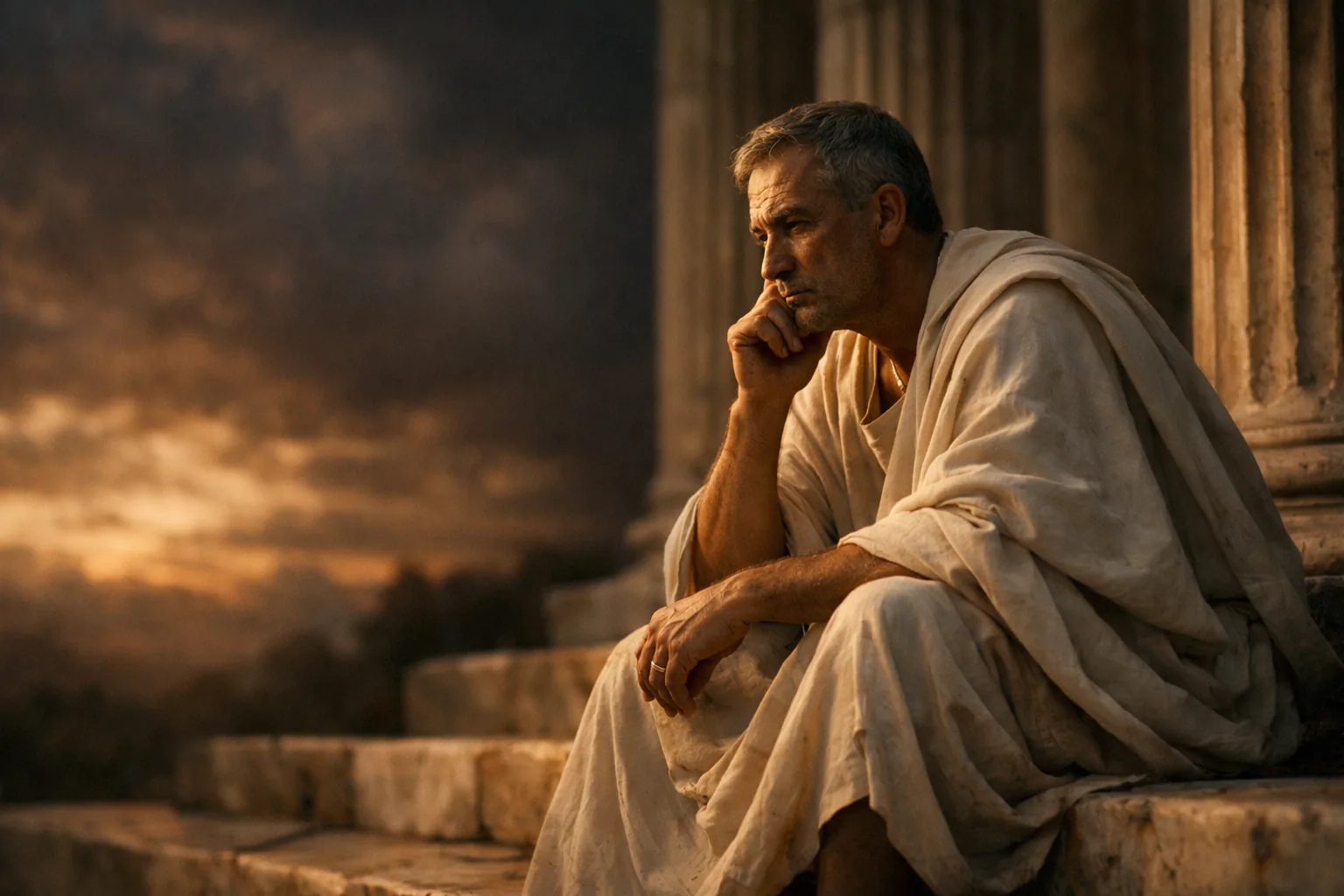
Mindfulness, Digital Detox, and Stoicism: An Ancient Compass for Modern Noise
Current wellness trends point to one need: less reactivity, more inner regulation. Stoics practiced this daily through prosochē, sustained attention to one's inner state.
Marcus Aurelius repeatedly wrote about gratitude, self-examination, and deliberate pause. What is now sold as performance ritual was for him simple philosophical hygiene.
Even negative visualization, often misunderstood, is not pessimism. It sharpens appreciation and reduces panic by preparing the mind for uncertainty.
Practical Stoic Exercises Against Burnout
Stoicism is practice, not theory. Four simple exercises:
1. Morning control check
Ask: What is truly in my control today? Write concrete actions. Cross out what is not yours to command.
2. A deliberate offline break
Take one midday pause without feeds, alerts, or messages. Recovery is part of disciplined living.
3. Evening journal
Write three lines: what went well, what can improve, what you release for today.
4. The Stoic pause
When overwhelmed, stop and ask: Is this truly important, or only urgent in feeling? This pause interrupts automatic stress loops.
A Balanced Life: What Stoicism Actually Promises
Stoicism does not promise a stress-free life. It promises something more realistic and more useful: steadiness under pressure, clarity under uncertainty, and character under strain.
Burnout is not a moral failure. Often, it is a signal that too much energy has been invested in the wrong domain. Stoicism invites a reset: What matters? Who do I want to be? Where should my finite attention go?
For Marcus Aurelius, Seneca, and Epictetus, these were not abstract questions. They were daily practice. That is exactly why Stoicism remains a modern tool for mental health and inner strength.