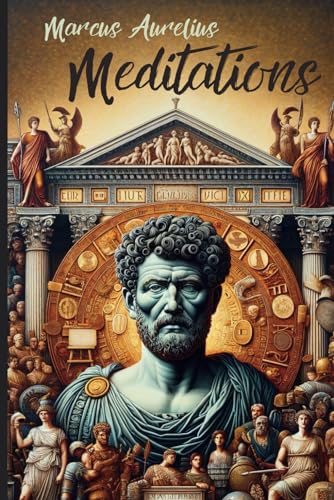

This page gathers some of the most enduring quotes from Marcus Aurelius and places them in a practical context for modern life. It is designed as a lasting resource for readers seeking Stoic wisdom, daily clarity, and grounded orientation for resilience, discipline, and inner steadiness.
You will find thirty Marcus Aurelius quotes, followed by selected lines from Seneca, Epictetus, Confucius, and Laozi. Each quote is paired with a short reflection so the page offers more than a list of sayings: it offers practical direction.
Table of contents
- 30 Marcus Aurelius Quotes With Reflection
- Additional Voices: Seneca, Epictetus, Confucius, and Laozi
- How to Use This Quotes Page
30 Marcus Aurelius Quotes With Reflection
You have power over your mind – not outside events. Realize this, and you will find strength.
Marcus Aurelius
Interpretation: Stoic resilience begins when you separate what belongs to your character from what belongs to chance.
The happiness of your life depends upon the quality of your thoughts.
Marcus Aurelius
Interpretation: This quote reminds us that repeated thinking becomes atmosphere, and atmosphere eventually becomes destiny.
Waste no more time arguing what a good man should be. Be one.
Marcus Aurelius
Interpretation: Marcus Aurelius keeps pushing philosophy out of abstraction and back into conduct, habit, and immediate action.
The best revenge is not to be like your enemy.
Marcus Aurelius
Interpretation: Marcus Aurelius shifts the focus away from the enemy and back to your own character. Real strength lies not in retaliation, but in refusing to let injustice dictate the way you behave.
If it is not right, do not do it; if it is not true, do not say it.
Marcus Aurelius
Interpretation: This quote reduces Stoicism to a clear standard: integrity over convenience, truth over self-deception.
Very little is needed to make a happy life; it is all within yourself, in your way of thinking.
Marcus Aurelius
Interpretation: Marcus Aurelius points back to an inner economy: peace grows when we stop outsourcing a good life to circumstance.
Our life is what our thoughts make it.
Marcus Aurelius
Interpretation: This quote reminds us that repeated thinking becomes atmosphere, and atmosphere eventually becomes destiny.
Dwell on the beauty of life. Watch the stars, and see yourself running with them.
Marcus Aurelius
Interpretation: Marcus Aurelius opens the mind here to scale and wonder. When you stop circling only around yourself and see your life as part of something larger, perspective becomes calmer, clearer, and more ordered.
When you arise in the morning, think of what a privilege it is to be alive.
Marcus Aurelius
Interpretation: Stoicism is not emotional dryness; it also trains gratitude as a disciplined way of seeing the ordinary.
The impediment to action advances action. What stands in the way becomes the way.
Marcus Aurelius
Interpretation: Resistance is not always a sign to retreat; often it is exactly where endurance and self-command are forged.
Confine yourself to the present.
Marcus Aurelius
Interpretation: A Stoic mind becomes stronger when it returns from imagined futures to the one duty directly in front of it.
Receive without pride, let go without attachment.
Marcus Aurelius
Interpretation: Acceptance here does not mean passivity; it means refusing to waste energy fighting the fact of what is already true.
You could leave life right now. Let that determine what you do and say and think.
Marcus Aurelius
Interpretation: Marcus Aurelius uses mortality not to darken life but to strip away delay, vanity, and trivial distraction.
Look well into yourself; there is a source of strength which will always spring up if you will always look.
Marcus Aurelius
Interpretation: Stoic resilience begins when you separate what belongs to your character from what belongs to chance.
Loss is nothing else but change, and change is Nature's delight.
Marcus Aurelius
Interpretation: Much suffering softens the moment we stop treating change as a personal insult and start treating it as reality.
Adapt yourself to the life you have been given.
Marcus Aurelius
Interpretation: Acceptance here does not mean passivity; it means refusing to waste energy fighting the fact of what is already true.
Be tolerant with others and strict with yourself.
Marcus Aurelius
Interpretation: This line cuts through vanity by reminding us that clear judgment starts with humility, not self-display.
Everything we hear is an opinion, not a fact. Everything we see is a perspective, not the truth.
Marcus Aurelius
Interpretation: This line cuts through vanity by reminding us that clear judgment starts with humility, not self-display.
The soul becomes dyed with the color of its thoughts.
Marcus Aurelius
Interpretation: This quote reminds us that repeated thinking becomes atmosphere, and atmosphere eventually becomes destiny.
It never ceases to amaze me: we all love ourselves more than other people, but care more about their opinion than our own.
Marcus Aurelius
Interpretation: This line cuts through vanity by reminding us that clear judgment starts with humility, not self-display.
A man's worth is no greater than the worth of his ambitions.
Marcus Aurelius
Interpretation: The Stoic test is simple: choose what is right over what flatters your ego in the moment.
External things are not the problem. It is your assessment of them.
Marcus Aurelius
Interpretation: Stoic resilience begins when you separate what belongs to your character from what belongs to chance.
The universe is change; our life is what our thoughts make it.
Marcus Aurelius
Interpretation: Much suffering softens the moment we stop treating change as a personal insult and start treating it as reality.
Dig within. Within is the wellspring of good.
Marcus Aurelius
Interpretation: Stoic resilience begins when you separate what belongs to your character from what belongs to chance.
Be cheerful, and seek no external help.
Marcus Aurelius
Interpretation: Acceptance here does not mean passivity; it means refusing to waste energy fighting the fact of what is already true.
To live happily is an inward power of the soul.
Marcus Aurelius
Interpretation: This quote reminds us that repeated thinking becomes atmosphere, and atmosphere eventually becomes destiny.
No role is so well suited to philosophy as the one you are in right now.
Marcus Aurelius
Interpretation: Marcus Aurelius keeps pushing philosophy out of abstraction and back into conduct, habit, and immediate action.
Do every act of your life as though it were the very last act of your life.
Marcus Aurelius
Interpretation: Marcus Aurelius keeps pushing philosophy out of abstraction and back into conduct, habit, and immediate action.
The perfection of character is this: to live each day as if it were your last, without frenzy, without apathy, without pretense.
Marcus Aurelius
Interpretation: Marcus Aurelius uses mortality not to darken life but to strip away delay, vanity, and trivial distraction.
Love only what falls to you and is spun for you by fate.
Marcus Aurelius
Interpretation: Acceptance here does not mean passivity; it means refusing to waste energy fighting the fact of what is already true.
Do not act as if you were going to live ten thousand years.
Marcus Aurelius
Interpretation: Marcus Aurelius uses mortality not to darken life but to strip away delay, vanity, and trivial distraction.
Additional Voices: Seneca, Epictetus, Confucius, and Laozi
We suffer more in imagination than in reality.
Seneca
Interpretation: Seneca points to how much pain is created in advance by the mind. Often the hardest part is not reality itself, but the fearful story we build around it before it arrives.
It is not that we have a short time to live, but that we waste much of it.
Seneca
Interpretation: A Stoic mind becomes stronger when it returns from imagined futures to the one duty directly in front of it.
Wherever there is a human being, there is an opportunity for kindness.
Seneca
Interpretation: Even in a philosophical context, this quote grounds wisdom in how we treat the person standing in front of us.
No man is free who is not master of himself.
Epictetus
Interpretation: Stoic resilience begins when you separate what belongs to your character from what belongs to chance.
First say to yourself what you would be; and then do what you have to do.
Epictetus
Interpretation: Marcus Aurelius keeps pushing philosophy out of abstraction and back into conduct, habit, and immediate action.
Make the best use of what is in your power, and take the rest as it happens.
Epictetus
Interpretation: Acceptance here does not mean passivity; it means refusing to waste energy fighting the fact of what is already true.
Real knowledge is to know the extent of one's ignorance.
Confucius
Interpretation: True learning begins when certainty becomes more modest and self-knowledge becomes more honest.
He who knows others is wise; he who knows himself is enlightened.
Laozi
Interpretation: True learning begins when certainty becomes more modest and self-knowledge becomes more honest.
How to Use This Quotes Page
The best way to read quotes is slowly. Choose one sentence, sit with it for a day, and ask how it changes your next decision, your next conversation, or your next reaction. Stoicism becomes useful only when it leaves the page and enters conduct.